Monday, March 31, 2014

Book Review: The Book of Paul, by Richard Long

In a slight departure, I'll post a review that I wrote of Richard Long's debut novel, The Book of Paul, an Amazon #1 Best-selling Horror title that surprisingly has many of the same philosophical/mythological ingredients as The Last Ancient, but Mr. Long mixed it all together with a decidedly horror-stained knife. I reached out to Mr. Long after reading his book -- it made me feel less strange to see someone else's mind had travelled in an even remotely similar direction as my own in creating a fictional universe-- and he seems like a good dude.

Here's my review, as posted on Amazon.com, where you horror fans (and this is pretty rough horror; it's as graphic as it is intelligent) can get The Book of Paul.


Piercing, Thrilling, Intelligent Literary Horror


The Book of Paul hammers one piercing into your brain with its deft prose and then slams another piercing through your heart with its dark psychological truth. It links the two bloody holes together by a gold alchemical chain of richly drawn characters and philosophy, dragging you by it down a rabbit hole of thrilling action, unsettling horror, shockingly sweet love, and exquisitely researched mythology and serial-killer-psychology that haunts the reader, changing you as much as The Book of Paul’s characters themselves are altered by their indulgences in dark obsessions, tattoos, piercings, extreme ritual violence, and even more extreme body modification.

This novel is about many things. Each thing is held up to a sinister glowing black light by an innovative, fluid mix of genres, styles, and perspectives. But most of all The Book of Paul seems to be about the process and results of transformation: about inner change and its physical manifestations, be it defined by spiritual transformation of the C.G. Jungian alchemical variety and its pursuant enlightenment, or the darker kind, something like transmogrification of the classical horror variety, which the book revels in. The characters--richly fleshed out with literary back-stories in the tradition of backstory grand-master Stephen King himself—become so real that readers wince every time the needle pierces their flesh, every time a new emotional abuse pushes them further into their own private hell.

Ultimately, The Book of Paul contains everything a horror fan could ask for, as debut author Richard Long serves up his own brand of thrill-fear in a mouth-watering stack of flavors: murderous evil, body horror, deeply nuanced psychological horror, and more. His shadowy portrait of transformation is colored by darker shades of torture and suffering contrasted with, perhaps more importantly, brighter meditations on love in its various forms, from erotic to familial (and several shades between). It’s all told with dark humor via an ingenious narrative device allowing the “voice of God” third person perspective to be conveyed by another central character who, given the laws of Paul’s universe, believably tells the story with compelling, wince-worthy insight and intelligence.

By God, this is a good book. It hooks you immediately with the travails of its heartbreakingly broken characters, and pushes you along the path to the fascinating conclusion via your shuttered-eyed sympathy for their actions, which are often egregious insults to morality.

Long’s largest character is his villain, Paul. Particularly poignant is Paul’s evil-paternal relationship with the co-protagonist, Martin (a Clint Eastwood badass anti-hero molded into a borderline psychopathic soldier by events beyond his control; whose still-redeemable soul is touched by Rose, a pierced Goth princess whose own troubled past hasn’t entirely corrupted her capacity for love; and who, together, could tip the balance as representatives of opposing forces of a world-threatening prophecy).

The Paul/Martin relationship is one of the better I’ve read. It mirrors the bond between cult leader and cult Lieutenant, between bully and sycophant, between abusive father and love-damaged offspring, between any person, really, and the narcissistic abuser controlling their life. It’s a relationship that by its very nature is horrific in how the borders of love and hate, kindness and torture, charm and soullessness, abuse and protection, are so often trespassed as to shatter one’s core to pieces so that the abuser can glue them back together into whatever form he desires to maintain his follower’s dependence. The co-dependent backbone of this relationship comprises real horror because even though it’s applied to a vaguely supernatural being and a child of preternatural destiny, this relationship is a reality for many, and shows how not bad people can be shaped into instruments of destruction. When horror teaches us about humanity, it has reached special heights, literary heights (think: Glen Duncan, some Stephen King, all the old Lovecraft/Poe/Shelly/Stevenson/Stoker classics) and the Book of Paul does this.

All ye who enter here, know this. There is torture. There is alchemy. There is sex. There is blood. There is prophecy. There is humor. There is alchemical symbolism. There is action. There is horror. Yes, there is horror.

Thursday, March 27, 2014

The Last Ancient at Finncon in Jyväskylä July 11 - 13


My first booked reading! It's not yet official, but I've been scheduled to read, present, and speak sometime between July 11 - 13 in Jyväskylä at Finncon, Finland's biggest scifi/fantasy convention. Other speakers include highly accomplished authors Elizabeth Bear, Hannu Raijaniemi, Jukka Halme, and  more. 

http://2014.finncon.org

I'm hoping The Last Ancient will have been in print a couple months by then. For those of you who haven't downloaded a copy and want to get a print copy, consider spending the $5.95 for a download from BURST Books. It turns out the download numbers from Amazon aren't reported until at least a month after their financial quarter ends March 30. Even so, I am so close to the 100 downloads threshold in my publishing contract. Just a handful more will push the needle past 100 and over to PRINT COPY that so many of you have been asking about. Here's the link, as it is on the upper righthand corner of this blog:  http://burstbooks.ca/product.php?id_product=113

Happy reading all!

Friday, March 14, 2014

RAVE KIRKUS REVIEW OF THE LAST ANCIENT!!!

OK Ancient fans, this is a big deal. My first big review. This is like getting stamped "APPROVED AWESOME" by the literary establishment. I enclosed the review in full below. Here's the link as well: https://www.kirkusreviews.com/book-reviews/eliot-baker/the-last-ancient/

KIRKUS REVIEW


A Nantucket reporter investigating deer mutilations uncovers a much larger—and stranger—story in this suspenseful thriller.
Something is mutilating deer in Nantucket. Simon Stephenson, son of a rich father who recently died, spent a lot of time on the island, but he now makes his own living as an environmental reporter. But almost at once, the story he’s following becomes far more mysterious and deadly, and it begins to include Simon himself; rare gold coins keep appearing around him, even in his pockets. At a dinner party, a French woman who knew Simon’s father whispers to him, “Find it,” then “Kill it….And a god you will become.” As dramatic as that sounds, the ensuing events don’t disappoint. Simon uncovers a shadowy, age-old conspiracy involving alchemists, the gold standard, the Philosopher’s Stone, Nantucket, and the Gryphon, a mythological creature known as messenger, guardian and divine counselor. Everything, it turns out, is at stake, and Simon faces a decision that will have enormous consequences. In his debut novel, Baker shows great skill, expertly upping the stakes while keeping the progression believable. His characterizations and dialogue are excellent. He quickly sketches recognizable types—Nantucket fishermen, high-society swells, a buff bodyguard. Simon’s character is multidimensional—he has panic attacks and complicated feelings about his father, a powerful man who died after Simon wrote an exposé on his company’s arms dealing. Several characters are not what they seem, and revelations about them serve the story well. Baker includes a few welcome laugh breaks; he also writes a good erotic scene. The conclusion, a bit of a gamble, honors the logic of the thriller.
A multilayered, surprising and beautifully written novel of mythology, suspense and mystery.

Thursday, March 13, 2014

Soul and the Story


            People often ask me how my career in journalism affected my work as a novelist. It’s a great question because the answer is fairly illuminating on the craft of writing, which takes unequal parts dedication, practice, courage, vision, talent, persistence, thick skin, and perspective.
In short, my journalist career made my novelist dreams a reality. It did so in several ways, partly by forcing me to summit the mountainous 10,000 hours of writing practice required for mastering the basic science of good sentences. It did so even more partly by helping me learn how to build stories -- on deadline! -- that contained beginnings, middles, and ends. It did all of this, mind you, while working with editors and colleagues and sources to make sure the story actually worked for its readers and was true to itself. That’s called professionalism, and it’s an invaluable tool for writers of all stripes.
But the most important lesson journalism crystallized for me was that every story has a soul. It’s up to the writer to find it, name it, and nurture it.  In journalism, that’s called nailing your lead and/or your focus graph (the paragraph somewhere near the top of the feature that drills down into what the whole long story is about).
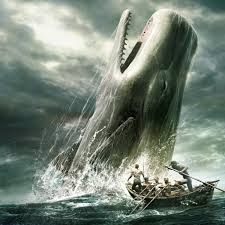
Yes, stories do indeed have souls. The same soul can grow into many different directions, with entirely different sets of characters, locales, and events. Just think about how some cultures believe souls go on to live multiple lives. But the story’s soul is yours to toy with; it's the magic seed necessary for growing a great narrative. Think about the souls of great literary works like Frankenstein, Moby Dick, Don Quixote, The Iliad; they’ve all been told and re-told by later authors and film makers who embraced the story's absolute core or parable, and used it to grow their own new narrative.
What does a story’s soul look like? Let’s see if you can affix these souls to a work of fiction. The story’s soul is: about fellowship triumphing over darkness in the Orc Apocalypse. It’s about overcoming addiction and an intellectually oppressive society to find truth and happiness as an individual. It’s about love killing the demons. It’s about revenge on the shark that ate your mates from the USS Indianapolis.


The soul of a story appears ludicrously simple once it’s denuded to its core, but that’s what makes it so powerful. It’s pure. So whenever you get lost in your story – or article, or essay, or love letter – you can always close your eyes, repeat the story’s soul in your head like a mantra, and then proceed. The story’s soul is your guiding light, your north star.
            It starts with the lead. My English professor, Al Wachtel at Pitzer College, used to drill us on thesis statements, a single line (maybe two) into which is condensed the core principle of your entire paper. At eighteen, I thought this was absurd. I silently seethed that over the course of four pages (four pages! Ah! That’s so long! How will I ever type that much on Beowulf!), there is bound to be stacks and layers of messages and meanings that can’t possibly be bundled up and wrapped into a single, encapsulating thesis statement.
WRONG. It can, and it must, be done. If you can’t, you don’t have a cohesive message. Just a pocket of story pearls without a necklace stringing them together. The thesis statement is that necklace. In journalism, when you pitch a story, your editor might say, “Okay, I get it that it’s interesting to you. But what’s the story? What’s the hook?” You need to be able to answer that in such a way that you can sell it to your editor. Or sell your book to an agent with an elevator pitch. Or sell your just-about-anything to just-about-anyone. Otherwise you won’t be able to sell it to your readers, or your clients and consumers. They’ll know you’re pushing something soulless.
Back to the lead. A lead can be three words or it can be thirty. It can answer the five Ws (whowhatwherewhenwhy and how) or it can simply establish the mood: “Call me Ishmael.” “We were somewhere around Barstow on the edge of the desert when the drugs began to take hold.” Regardless, you develop such an intimate relationship with your story what with all the time and energy you devote to it that, until you nail your lead (or your thesis sentence, or your focus graph, or whatever you want to call it), you won’t get the most out of it, just as you can’t possibly have a healthy relationship with someone whose soul eludes you. Find the story’s soul. Embrace it. Nurture it. Then write the hell out of it.
That’s not to say a story can’t have a complicated, hard-to-define soul. It can. But as a writer, I keep coming back and examining my stories’ souls to make sure the plot moves along with some sense of continuity and consistency. I carve out pieces of the story’s soul and implant these mini-souls into each of the characters so as to support the overarching story. Yes. My books have soul.
Writing is good for your own soul. It makes you a smarter and deeper human when you take the craft seriously. Forced to probe your own depths to identify the story’s soul, you may find that all’s well in your interior; or you might discover some areas that need some work, be it by way of knowledge or experience or emotion. In any case...
Keep looking. Keep writing. Keep improving. And pray the story its soul to keep.


Wednesday, February 26, 2014

Tanque Verde: Desert Heaven


I’ve been to heaven. It’s a dude ranch located in Tucson, Arizona. Surprised? Don’t be. It makes sense once you understand what this desert gem offers. What it signifies to us as individuals and social animals, as youngsters and not-so-youngsters, as singles and family folk, as gluttons and fitness freaks, as Team America and Team Finland (Olympic hockey eviscerations notwithstanding).

My family first went to Tanque Verde Ranch for Thanksgiving when I was two months old. We spent our next 25-odd Thanksgivings going back together, meeting a group of other like-minded families each year. It wasn’t just the food – bacon, eggs and pancakes and a fresh fruit buffet for breakfast; buffet lunches with carved prime rib and an epic dessert table; followed by a gourmet dinner. Well, okay, the food was pretty important. But not all-important.

The place is magical. It starts with the ride from the airport: forty-five minutes down a scorched desert highway that stretches past the Pima Air Museum's rusty hulls of thousands of decommissioned military planes, all set within a bowl of mountains ensconcing a sandy ocean of giraffe-sized saguaros and stout golden barrels and prickly pears and cholla cactus. The extreme scenery change always shocked the dreary Seattle November blahs out of me as a kid. I experience the same pleasant shock last week; even after nine years away, even after flying approximately 6.66 million miles to Tucson from Finland with my wife and our six-year-old and four-year-old. We all felt it once we gazed into the Sonora Desert, the greenest desert in North America. What “It” is I can’t exactly say, but it is magic and it makes six-year-old Finnish-American girls make up epic 10-minute songs that they sing with their little brother while their father, sitting behind his own brother, looks at the kids and remembers, “That was me, 30 years ago.” And ahead of us all rides grandpa, staring out the window with his own serene smile despite a long day's travel. Tres generaciones. It's always a beautiful thing.


It was my kids’ first time at Tanque Verde. I wasn’t sure how they’d handle it. Their first language is Finnish, although no one would know that from speaking with them. But still, it's always an adjustment. They’d never worn cowboy boots on a horse before, and they’d never been in a kids’ program with real cowgirls serving as their wranglers and supervisors. They’d never seen rattlesnakes. Or played Sharks and Minnows. They’d never even roasted smores at a cookout. They were far from home, left to play with American kids most of the day while my wife and I rode horses on dusty trails surrounded by cactus and the occasional rattlesnake or long-eared rabbit or coyote or white-tailed deer. And it was hot, 89 degrees, hotter than it ever gets in Finland.

My kids loved it. Every second. They made friends, they had favorite horses (T-Rex for my boy, Arizona for my little girl), they caught fish in the lake. Tipping back a prickly pear Margarita, I watched over them one night from the guest ranch’s Dog House Saloon as they played a capture-the-flag type game with a score of other kids ages 4 – 19. Everyone ran and screamed and jumped and climbed the way I remember doing at that age on those same sport courts: un-self-consciously, free, in-the-moment, in the only place on Earth I wasn’t concerned about being cool or tough, but just with being a kid playing with other kids. I found myself talking to the teenagers and being struck at how genuine and interesting they were, how much they had to offer in spirit and curiosity when they spoke to me as just another rider at the ranch, rather than as a teacher or just some goofy adult to be tolerated. Again, the memories. That used to be me.


The adults were cool, too. Each day I met another interesting, bright, friendly person. This gregariousness differs from my life in Finland, which is perhaps Europe’s most introverted country, a place where smiling and saying hello to a stranger marks you as either an idiot, a cheat, a foreigner, or all three. I can go days without having chitchat of any kind in Finland (which carries its own advantages as well, to be sure.) But here, in Arizona, within a day I struck up a real community of people with whom I could imagine sharing a tradition with indefinitely, watching their children grow against the timeless backdrop of the desert. All by starting sentences with: "Where'd you come out here from?"


The real world and all its concerns stays far away from this place. At the ranch it’s about family, horses, people, and food, in roughly that order. Every day we’d ride out on the same dusty trails, jokingly fighting over the best horses in the corral. How you handled yourself in a Western saddle topped the way you handled yourself in a boardroom or a classroom. Riding was paramount. And for those who don’t ride, it was about tennis and hiking and biking. Or maybe just sun and food.

As an adult, I can better define the magic of Tanque Verde Ranch: it’s community. It’s serenity. It’s tradition. We can lose sight of those things as we get stuck in the zig and the zag of teenage social pressure, of college choices, of career struggles, of maintaining our families and our marriages. We can have falling outs with our friends and loved ones; but at the ranch, all is forgiven. We can make mistakes in our life choices; but at the ranch all is momentarily forgotten. We can have failures; at the ranch, all is renewed. We can get caught on the hamster wheel; at the ranch, all is slowed down. You achieve perspective in such a place. You remember what’s really important.

You remember how good it feels to just ride a horse at a gallop. How tasty a steak tastes fresh off a wood-fired grill. How fun it is to catch a trout.

To have such an extended moment of peace, without cell phones or iPads, without worry over groceries and daycare – where all physical and emotional needs are met, and all undue expectations are erased—is to achieve a brief glimpse of the royal life, only without the paparazzi.

And, therefore, Heaven.

My understanding of the Great Ranch in the Sky is that it’s supposed to be a place of boundless love, an endless green desert populated by electric guitar-strumming angels, where cold cerveza is always on tap for you and all your departed friends, family, band-mates, teammates, brothers in arms. All together again after a long, long journey apart. It is a final rejoining of your community. It is the ultimate reunion, the limitless ride into the sunset, the never-ending feast with a table set for two or two thousand, if it pleases.

Until that ethereal sky ranch happens… I’m cool with Tanque Verde.


Wednesday, January 29, 2014

Free Short Story: TURF RAM VENTILATOR


With the Seahawks facing off against the Broncos on Sunday in what will most definitely be an epic Super Bowl, I would be remiss to not share with you all a short story I wrote concerning football, of the American variety. In it, a man's dark, mysterious past replays before his eyes as he climbs the ranks of the Finnish football world. I enjoyed writing this story two years ago. I plan on publishing it some day in some form, but I have no idea where. Until then, enjoy. Consider it a thank you for tuning in and showing your support.

Some things to consider when reading this:
1. There is an American football league in Finland, and it's surprisingly extensive.
2. Tough dudes play in it.
3. I broke my pinky finger playing receiver for the Pori Bears. It reminded me that:
4. I am too old, slow, and unskilled to play receiver for the Pori Bears. Or any other team, for that matter. And I have no business being on a football field with young, fast, strong people.
5. It's really hard to write with a broken pinky finger.


Turf Ram Ventilator

“Never die easy. Why run out of bounds and die easy? Make the linebacker pay. It carries into all facets of your life. It's okay to lose, to die, but don't die without trying, without giving it your best.” -- Walter Payton, Chicago Bears Running Back
           

            The pads click on and I am ready for the hurt. Been a while. Been too long. I missed the smell of sweat and fear on grass and chalk. The crack of plastic on bone and the feel of pigskin all rough and light tucked inside my arm. Seeing the linebacker’s eyes get wide and scared knowing he’s getting burned or blasted or both.
            And I keep pumping, baby. Like Walter Payton, Sweetness, said: Just keep pumping. Thick head down and rumble them tank treads. Don’t stop until you at the bottom of the pile or dancing in the end zone. Back in the day, no one wanted to take me head on so I’d go looking for contact. Always looking for trouble. Cost me yards on every play. Cost me a career. Cost too much. I know better now.
            I came a long ways to step back on the field. My plane out of SeaTac punched through the clouds and chased that sun all the way to Helsinki. That’s in Europe, by way of the North Pole. Then I bussed three hours North and some big towhead named Petri with eyes like them thousand lakes and skin like them birch trees here throws me a ball and says, “Welcome to the Pori Bears, Ray Graziano.”
            Funny, because I was named after the best Bear my daddy said he ever saw. And I dig bears. Always have. Them big fellas rise from their caves all lean and hungry for the sun after long, dark winters hibernating. And good Lord, that Finnish midnight sun. A man can run forever in daylight that don’t quit. Even a man like me. A man who ain’t what he says. A man who needs to rise from one dark cave.
            Give me eighteen inches of daylight. That's all I need. Gayle Sayers said that. No doubt. The Kansas Comet found daylight no matter where he ran, Kansas or Chicago or otherwise.
            I’m from Tacoma, myself. By way of Chicago, by way of a whole mess of couches in neighborhoods no kid should have to endure. But I keep pumping, baby. Just keep pumping. My baby boy understands.
            A shark stops swimming and he stops breathing. He dies, because he’s a ram ventilator. My baby saw it on Shark Week. I like that. I’m a ram ventilator, too.   
            First game, first play from scrimmage. I get in my stance and flex them tattoos and scars on my arms. Dudes on defense look scared. It makes my belly boil, like lava. Snap comes, they come in hot, so I use quick feet. Slide and spin, patience baby, wait for the hole, wait . . . daylight. Explode! Stiff-arm the linebacker. Get off my jersey, son, cause I’m breaking free. Keep pumping . . . I’m loose.
            I still got it. That extra gear kicks in and I’m into the secondary. The safety’s got cocky eyes, and I’m lowering my shoulder to knock some respect into this dude’s world the way I always done.
            Time freezes. I see my baby brother, hands folded across his chest, first time he’s worn a suit since we was kids at Sunday church. He looks pale, but peaceful. I’m sorry Sugar Ray. Sorry baby brother. I didn’t know how else to take care of you. Am I my brother’s keeper? No doubt.
            I fake left, plant, juke right. Knee don’t give, and I’m gone. So is baby brother. Touchdown, 85 yards – or, my bad, meters. I don’t know what a touchdown’s called in Finland, but I score three more and roll up 260 meters by the final whistle. The 50 people in the stands clap politely.
            Keep pumping, baby. All season long. Keep pumping.
            I break a whole mess of records. We go unbeaten and jump to the top division. Nicer uniforms, better players, bigger crowds, even better pay. Team wants more from me this season. Maybe too much. But I got that fire and there ain’t no feeding it back home. Hell, what home? Home ain’t nothing but fire and ash and ghosts. I rose back up from the grave once already. I’m a lot of things, but a nine-life cat ain’t one of them. My ol’ lady, she used to call me a snake. No doubt.
            Everybody knows when a snake sheds its skin, it’s shed for good. That’s called ecdysis. People shed their skin every month too, just don’t nobody see it. My skin’s shed.
            I gotta keep pumping in Finland.
            Papers say I got a future in Europe. Owners and players are respecting me like a man. Like Uncle Sam never did. I just been letting my pads do the talking up to now. Came too far to let my mouth shoot my foot. I won’t beat myself this time. I won’t quit.
            I meet a nice educated girl named Kaisla at the gym. Thick black hair and icy blue eyes. She asks me out. I can’t say no. I know I shouldn’t kick it in liquored-up joints full of white women. But I like her so I hit my first club in Finland. Dudes up in that piece look like James Bond villains. Couple start jawing at me. I don’t pay no mind, but one dude drops a coin in my jukebox and talks nasty to Kaisla, pinches her, and I’m about to waste it all on this knucklehead, I’m about to get pushed back into the earth, when Kaisla lays into him so hard in that language of machine gun rrrr’s and hissing S’s that I feel kinda sorry for him the way he stumbles off, tail tucked between his legs.
            She traces my scars that night at her place. Asks me where they came from. Keeps asking all winter. Asks me again in the summer at her family’s little cottage on the lake. They call it a mooki, or something like that. A place where we just roast in the sauna, swim, and listen to the birds. We watch two swans gliding on the lake, and we’re naked, waist deep in that cold blue water, her skin’s pink and hot with steam coming off it still from the sauna. She tells me that when swans mate, they mate for life. They are monogamous. She traces my scars again. Asks me where they came from. Asks me if l like it in Finland. Asks me if I could stay here. Stay with her.
I don’t care for lying to her no more. I tell her my real name, Gayle Graziano, and who and what I really am. She cries and cries, and I think she is leaving me when she lets herself slip under the water. It’s so quiet when she’s under water, nothing but wind and birds, and for the first time I see that nature is beautiful, just like my baby boy always said it was, even though he only saw nature on the TV. Then Kaisla comes back up and wraps her arms around me, all cold and wet and clean. She tells me my scars are beautiful. Tells me I’m beautiful. Tells me she loves me. She makes me feel clean again.
            New season. First game. We get stuffed by the Helsinki Wolverines the first series. And the second. And the third. We’re down 14-0 at half. Dudes are getting down on Adam, our new star American quarterback.
            He thinks he’s too good for Finland. He be hittin’ the bars and duckin’ the gym. But kid’s got skills. I scouted his tape and told the Bears to pay him bookoo Benjamins to run the option. Meanwhile I said nuh-uh to the German and Canadian leagues and no thanks to the Helsinki Wolverines’ cash. Ain’t about the bling, no more. I missed my shot for D-I, I lost my dream for the NFL. That ain’t me no more. I represent them Bears. No doubt.
            Swing pass to me. Stutter step, cut, bounce to the outside, keep pumping -- how you say See Ya in Finnish, partner -- break loose . . . but I’m caught from behind after 35 meters. I’m the strongest I’ve been, rock hard, 100 kilos no fat. But I’m not 4.3 quick like Gayle Graziano was.
            First down. Pocket collapses and I see why Adam never went nowhere in college ball. He loses his swagger, gets jitterbug feet, tunnel vision. Adam gives up on his blockers, gives up on his talent, panics and overthrows his man. His fault, but he’s barking at our tight end, Petri. I grab that big Finnish boy’s facemask and tell him, “Head up partner, I got your back.” Fumbled snap and Adam gets sacked the next play. Next one he’s mad doggin’ his slot receiver, Nikko, for running a bad route. Adam’s body language oozes defeat. Head up, dawg. Got your whole life ahead of you. Keep pumping, baby. Just keep pumping.
            We go on fourth down. Screen pass to me. Bad play call. Them Wolverines pin back their ears. But my boy Petri crushes the linebacker’s skull with a real-man block. I spin, keep pumping, break through two big linemen trying to pull me down.
            I lower my shoulder and straight coldcock the safety and I hear the Helsinki crowd of a thousand say, “Oi!” But the cornerbacks surround me, the linebackers pile on, and they’re pulling me down, down into the earth. Petri and Nikko are holding me up, pushing me forward. One more meter. Just one meter for four more downs.
            Just keep pumping, baby. I been down in that hole and I ain’t going there now. Not just yet.
            I see the casket beside my brother’s. My baby’s sleeping. My little boy. Not so little no more, not much younger than his uncle, Sugar Ray, and they look like brothers sleeping in church in their black suits. I’m sorry little man, I’m so sorry sweet Baby Ray. I named you after my baby brother, who my daddy named after Sugar Ray Robinson, best fighter he ever saw and that’s what I tried to make you, fighters, when you was so much more.   
            My baby brother grew up trying to ball like me and when that misfired, he tried to be hard like me. I’m sorry Sugar Ray. I didn’t know how else to raise you when momma passed on. But you grew up so big and strong and bright, and I needed muscle, needed loyalty on my crew, and you represent, no doubt.
            I’m sorry Baby Ray. I shoulda took better care of you after your momma quit. Never give up, keep on pumping, don’t you quit on our boy. What’d you think was gon’ happen, throwin’ that lamb to the wolves? But Baby Ray looked up at the gray Tacoma sky like he was seeing jungles and Africa only he could see and he looked wise in his fresh-faced, bright-eyed way, and he said it’s alright daddy, momma ain’t got the maternal instinct, I seen it with lions, I seen it on Nat Geo with Uncle Ray.
            Them bullets were mine. My evils, my enemies. Keep breathing Baby Ray! Don’t you quit on me, just keep breathing! Keep breathing Sugar Ray! Just keep breathing! I kept pumping your chest, the blood pouring down my arms into the holes in your heart. Then I stopped pumping. You didn’t quit. I quit. I failed. And then I quit for real. My crew wanted blood for blood. Extermination. My baby would have called it the primal instinct. But I just wanted to sink down into the earth with you. No more ram ventilation. Just hibernation. So I sank. I died that day.
            Hard things crumble and burn. Even comets. My old man named me after Gayle Sayers, The Kansas Comet. They flash bright then burn up in the sky before they hit the ground. I needed a daddy, but daddy’s gone, too. I looked to God but he was quiet. Forget You, then.
            I thought about all them nature things my baby taught me. Like how when caterpillars go into their big, dark case, most of their old body dies. And they eat that old body so the new body can grow and punch through that chrysalis a butterfly. That’s called metamorphosis.
            And that’s the truth.
            Baby Ray, you were so smart, always watching them nature programs and teaching me about hibernation and ecdysis and ram ventilation and metamorphosis. And Sugar Ray, always waving that passport and watching that travel channel and saying it’s a big ol’ world, let’s go roll up on it. I never listened. I quit on you both like I quit on myself.
            I tattooed your names over the bullet holes on my biceps. I’m RayRay now. I’m what you would have been if I’d done things right.
            Some baby sharks eat their own brothers in their momma’s belly. That’s called adelphophagy. They’re born killers. My baby saw it on Shark Week. Told me about it all wide-eyed, like he’d just seen a monster movie. And he looked at me funny, like . . . I was the monster.
            I was. Now I’m a butterfly.
            I pulled my old tape and told them foreign teams it was last year’s. Told ‘em I’m Ray, not Gayle. I’m twenty-three again. Not thirty-three. Rejuvenation takes eight hours of sweat a day and bottled youth. It takes sacrifice. But I’ll do it Baby Ray, I’ll do it Sugar Ray. I’ll atone for my adelphophagy. I am my brother’s keeper. And I’ll be as beautiful as my baby was if I keep ram ventilating in this big new ocean. No doubt.
            The Pori Bears came knocking for Ray Graziano. But I had to be Gayle one more time. So I flashed Gayle’s passport in Helsinki. Then I gave the Pori Bears Ray’s passport. Metamorphosis complete.
            I’m down. But my legs are still spinning like the wheels on an overturned bus and I’m crying, roaring, screaming, “Keep pumping Ray, keep pumping, don’t you quit Ray, don’t you ever quit!”
            First down by a nose. I bounce off the grass and I’m slapping helmets, shaking shoulder pads, roaring and crying. My Bears look at me like the crazy man I am but I can tell Adam gets it, they all get it: You never quit. You just keep pumping. Four more downs. Two more quarters. Another season.
            Keep pumping, baby. Just keep pumping.

“I learned that if you want to make it bad enough, no matter how bad it is, you can make it.”  -- Gayle Sayers, Chicago Bears Running Back